
How to Order Japanese Small Plates for the Whole Table
How to Pair Sake With Japanese Small Plates
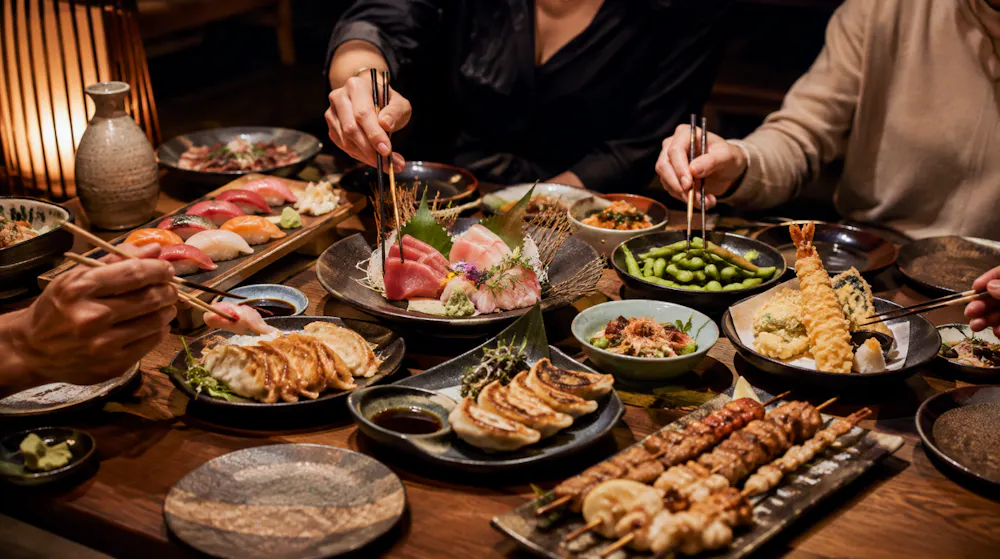
Sharing food can make a meal feel a little more relaxed. Instead of everyone choosing one large dish and staying with it, the table gets to try several flavors, textures, and cooking styles together.
That is one reason learning how to order Japanese small plates can make a group meal more enjoyable. You can start with something light, add a few richer dishes, then adjust as everyone discovers what they like.
At FORTU, Japanese-inspired small plates can turn dinner into more of a shared experience. There is no perfect formula, though. Some tables want sushi and fresh dishes. Others lean toward grilled meats, crispy bites, rice, or noodles. Most groups end up somewhere in the middle.
The important part is ordering enough variety without filling the table with too much food at once.
Key Takeaways
- Start with a few dishes instead of ordering everything immediately.
- Mix fresh, crispy, grilled, and savory items for more variety.
- Consider the number of people and how hungry everyone is.
- Order dishes that are easy to share across the table.
- Balance seafood, meat, vegetables, rice, and other filling dishes.
- Ask about allergies or food preferences before ordering.
- Add another round if the table is still hungry.
What Are Japanese Small Plates?
Japanese small plates are dishes meant to be enjoyed in smaller portions, often with several different items served during the meal.
They can include things such as:
- Sushi and sashimi
- Dumplings
- Grilled meat or seafood
- Vegetable dishes
- Crispy appetizers
- Rice dishes
- Noodles
- Small salads
- Skewers
- Shareable seafood
The idea is less about one person owning one dish. Instead, several plates arrive and everyone gets a little taste.
That makes small plates especially useful for groups where people want to explore different dishes without committing to one full meal.
How Many Japanese Small Plates Should You Order Per Person?
This is usually the first question people ask.
There is no exact number because portion sizes vary. Hunger matters too.
A group coming in for a light dinner will order differently from a table that has been walking around all afternoon and is very hungry.
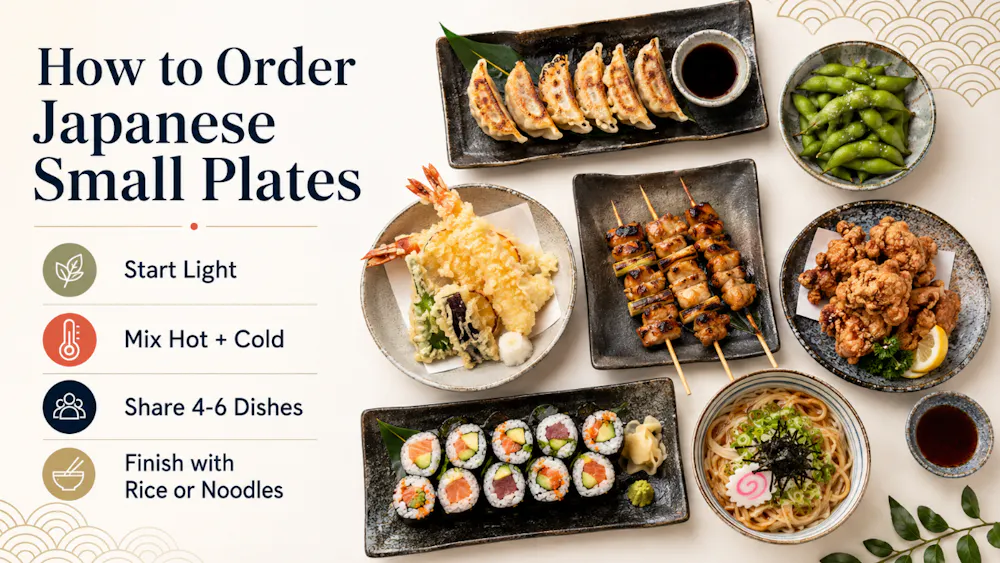
As a starting point, you might order two or three smaller dishes for every two people, then include one or two more filling items for the table.
For four people, for example, you might begin with five or six plates.
See how the table feels. You can always add more.
I actually think this works better than ordering ten dishes immediately. Too much food arriving at once can make the meal feel rushed, and hot dishes may cool down before anyone reaches them.
How to Order Japanese Small Plates With Enough Variety?
When thinking about how to order Japanese small plates, variety matters more than simply ordering a lot of dishes.
Try to mix different textures and flavors.
One simple combination might include:
- One fresh dish
- One crispy dish
- One grilled item
- One vegetable plate
- One rice or noodle dish
You can add sushi or sashimi if the group enjoys raw seafood.
This creates a meal where one plate does not feel exactly like the next.
For example, a crispy appetizer followed by delicate sushi and then a grilled dish gives the table very different experiences. That contrast is part of the fun.
Should You Start With Lighter Japanese Dishes?
Usually, yes.
Starting with lighter dishes lets you taste more without becoming full too early.
Sushi, sashimi, salads, chilled seafood, or lightly seasoned vegetables can work well near the beginning.
Then you can move toward richer or heavier plates.
That might include grilled meats, fried dishes, dumplings, rice, or noodles.
This does not need to be a strict order.
If someone really wants a crispy dish first, that is fine. A shared meal should feel comfortable, not like everyone is following a complicated dining rule.
What Japanese Small Plates Are Best for Sharing?
The best Japanese dishes for sharing are usually easy to divide into several bites.
Dumplings are a simple example.
Skewers can also work well. So can sushi rolls that are already cut into individual pieces.
Grilled seafood, sliced meats, vegetable dishes, and shareable appetizers are also useful.
The trick is thinking about the table.
A dish with only two pieces may be awkward for a group of six unless you order more than one.
Before ordering, look at how many people will probably want to try each item.
That small detail can prevent the familiar moment where one piece is left and everybody politely pretends they do not want it.
How Should You Balance Sushi, Meat, and Vegetable Dishes?
A balanced Japanese shared meal does not mean every category needs the exact same number of plates.
Still, it helps to avoid ordering everything from one section of the menu.
If the table orders mostly fried food, the meal can start feeling heavy.
If everything is raw seafood, someone who prefers cooked food may have fewer options.
A good mix might include seafood, meat, vegetables, and one filling carbohydrate such as rice or noodles.
When learning how to order Japanese small plates, it helps to ask everyone one simple question before choosing:
What is the one thing you really want to try?
Once each person has a favorite included, filling the rest of the table becomes much easier.
Should You Order Everything at Once?
You can, but you do not have to.
Ordering in rounds often works nicely for small plates.
Start with a few dishes. Eat. Talk. See what everyone likes.
Then order another round based on what the table still wants.
Perhaps everyone thought they wanted lots of sushi, but the grilled dishes turned out to be the favorite. Or maybe one vegetable plate disappears surprisingly fast.
Ordering slowly gives you room to adjust.
It can also reduce food waste.
How Do You Order Japanese Food for a Group With Different Preferences?
Group meals can become tricky when one person loves raw fish, another wants cooked food, and someone else prefers vegetables.
A mixed order usually solves this.
Consider including:
- Raw seafood for sushi or sashimi fans
- Cooked seafood
- Grilled meat
- Vegetable dishes
- Rice or noodles
- At least one familiar shareable appetizer
Ask about allergies before placing the order.
This is especially important with shellfish, soy, sesame, gluten, and other common ingredients.
If someone has a serious allergy, speak with restaurant staff rather than guessing based on a dish name.
Do You Need Rice or Noodles With Japanese Small Plates?
Not necessarily.
But adding something filling can make the meal feel more complete.
Small plates are easy to keep eating because each dish seems, well, small.
Then suddenly everyone realizes they have eaten quite a bit.
Rice or noodles can help anchor the meal and make sharing easier for a hungry group.
You might order them later rather than immediately. That way you know whether the table actually needs something more substantial.
How to Order Japanese Small Plates Without Ordering Too Much?
A common mistake when figuring out how to order Japanese small plates is assuming every person needs several dishes of their own.
Remember, everyone is sharing.
Start smaller than you think.
For example, a table of four does not necessarily need twelve dishes right away.
Choose a balanced first round, then add more.
Watch what disappears quickly.
If one dish becomes the favorite, order another.
If everyone is slowing down, you probably have enough.
It sounds simple because it is.
What Should You Do With Sauces and Condiments?
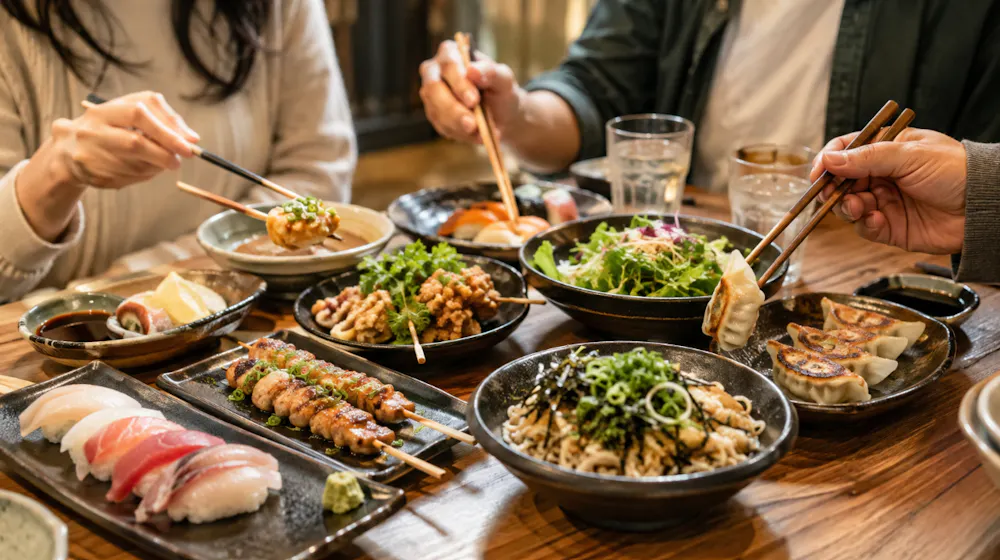
Japanese-inspired dishes may come with sauces or condiments designed to complement the food.
Try the dish as served before adding extra sauce.
Sometimes the chef has already balanced salt, acidity, sweetness, spice, and texture.
Adding too much soy sauce or another condiment immediately can cover up those flavors.
For shared plates, it also helps to avoid pouring sauces directly over the entire dish unless everyone agrees.
Use your own small plate when possible. That keeps things easier for the group.
Is There a Right Order for Eating Japanese Small Plates?
There is a traditional idea of progressing from lighter flavors to stronger ones, especially when eating sushi.
But a casual shared meal does not need to follow a strict sequence.
You might start with fresh seafood, move to grilled dishes, then finish with rice, noodles, or something richer.
Or the food may arrive in a different order.
That is okay.
The goal is to enjoy the table.
Knowing how to order Japanese small plates should make dinner easier, not turn it into a list of rules everyone is afraid to break.
Frequently Asked Questions
How Many Small Plates Are Enough for Four People?
Around five or six dishes can be a reasonable starting point, depending on portion size and appetite. Add another round if everyone is still hungry.
Can Japanese Small Plates Work as a Full Dinner?
Yes. Several shared plates combined with rice, noodles, sushi, grilled dishes, or another filling item can easily create a complete meal.
Should Everyone Order Their Own Dish?
Not necessarily. Small plates are often better when several dishes are placed in the middle and shared.
What If Someone Does Not Eat Raw Fish?
Include cooked seafood, grilled meat, vegetable dishes, dumplings, rice, noodles, or other cooked items so everyone has something to enjoy.
Should I Order All the Food at Once?
You can, but ordering in rounds can make it easier to judge portions and choose more of the dishes everyone enjoys.
Are Japanese Small Plates Good for First-Time Diners?
Yes. Sharing several dishes lets someone try different flavors without having to choose one unfamiliar full-size entrée.
Final Thoughts
Japanese small plates are really about sharing and exploring.
You do not need to know every dish before sitting down.
Start with a little variety. Mix fresh and cooked dishes. Include something crispy, something filling, and perhaps a few things nobody at the table has tried before.
At FORTU, sharing different Japanese-inspired dishes can make the meal feel more social and a little more interesting.
And once you understand how to order Japanese small plates, there is really no need to overthink it.
Order a few. Share them. See what everyone likes. Then keep going if the table is still hungry.