
Japanese Milk Bread With Yuzu Butter: Starting a Shared Meal at Fortu

Japanese milk bread is one of the simplest pleasures on a menu, and one of the best ways to start a shared meal. It is soft, a little sweet and very light, which makes it an easy first bite for almost everyone at the table. At Fortu, our Japanese-inspired restaurant in downtown St. Petersburg, we serve Japanese milk bread with a yuzu marmalade butter. This guide explains what makes the bread so tender, where the style comes from, and how it fits into a dinner built around shared plates.
In a hurry? Call (727) 866-4633
Key Takeaways
At Fortu, we serve Japanese milk bread with a yuzu marmalade butter.
Japanese milk bread is a soft, enriched white bread made with milk, and often with butter and a little sugar.
Many bakers use a cooked flour paste called tangzhong to keep the crumb moist and fluffy.
Yuzu is a fragrant Japanese citrus with a flavor that falls somewhere between lemon, grapefruit and mandarin.
The bread works best early in the meal, when it can be shared and used to soak up sauces.
What Is Japanese Milk Bread?
Japanese milk bread is a soft, enriched white bread made with milk, and often with butter and a little sugar. In Japan, a loaf of soft white bread is often called shokupan, which roughly means "eating bread." It has a thin golden crust and a white crumb that pulls apart in long, feathery strands. Some bakeries call it Hokkaido milk bread, a name that points to the dairy from Japan's northern island of Hokkaido.
The bread is popular across Japan and much of Asia, where it shows up in bakeries, in sandwiches and on breakfast tables. In restaurants, it is often served at the start of a meal, much the way other cuisines might serve a basket of dinner rolls.
What Makes Japanese Milk Bread So Soft?
The texture comes from a few choices bakers make at each step. Here is how each one helps.
Technique or ingredient | What it does for the bread |
Tangzhong or a similar cooked starter | Lets the dough hold more water, which keeps the crumb moist and soft |
Milk in the dough | Adds richness and helps the crust brown to a deep golden color |
Butter | Makes the crumb tender and adds a rich, buttery flavor |
A little sugar | Adds gentle sweetness and helps the crust color evenly |
Long kneading | Builds a strong, stretchy dough that rises tall and light |
Many bakers use a cooked flour paste called tangzhong to keep the crumb moist and fluffy. To make it, a small amount of flour is cooked with water or milk until it turns into a thick paste, and that paste is then mixed into the dough. Because the cooked starch holds onto more water, the bread stays soft and keeps its fresh texture longer. Another method, called yudane, mixes flour with boiling water and rests it before use, with a similar effect.
What Is Yuzu Marmalade Butter?
Yuzu is a fragrant Japanese citrus with a flavor that falls somewhere between lemon, grapefruit and mandarin. Its zest is very aromatic, so a little goes a long way, and yuzu marmalade is a sweet spread made from the fruit and its peel.
When the marmalade is folded into butter, the result is creamy, sweet and bright all at once. The citrus cuts through the richness of the bread, and it also makes the first bite of the night feel fresh rather than heavy. If you love yuzu, you can find it in other parts of our menu too, including the king crab with yuzu beurre blanc and the lychee panna cotta with yuzu-mint. Our guide on how Japanese ingredients transform craft cocktails shows how yuzu and other flavors show up behind the bar.
In a hurry? Call (727) 866-4633
How Does Japanese Milk Bread Fit Into a Shared Meal at Fortu?
Every plate at Fortu is made to be shared, so the table builds the meal together. The bread works best early in the meal, when it can be shared and used to soak up sauces. Many tables order it alongside the first round of hot plates so it can be passed around while the next dishes arrive.
Here is one simple way to build a meal around it:
Start raw and chilled. Try the bluefin akami tartare or the hamachi.
Add the bread. Japanese milk bread comes with a yuzu marmalade butter for spreading.
Move to hot plates. Wagyu gyoza with brown butter ponzu or the mushroom dumpling with parmesan dashi are good matches.
Share a larger plate. The miso black cod is served with happo dashi, a seasoned broth that the bread can soak up.
Finish sweet. Ube cheesecake or lychee panna cotta closes the night.
For two people, one order of bread is usually enough to share, while a group of four or more may want two orders. Our guide on how to order Japanese small plates has more tips for planning portions.
What Should You Drink With Japanese Milk Bread?
The bread is mild and slightly sweet, so it pairs well with many drinks. A dry sparkling wine refreshes the palate after each buttery bite. A clean, crisp sake also works well and carries into the raw dishes that often come next. Our sake food pairing guide explains the main sake styles.
If you prefer a cocktail, citrus-forward drinks echo the yuzu in the butter, and our team can suggest a pairing when you order.
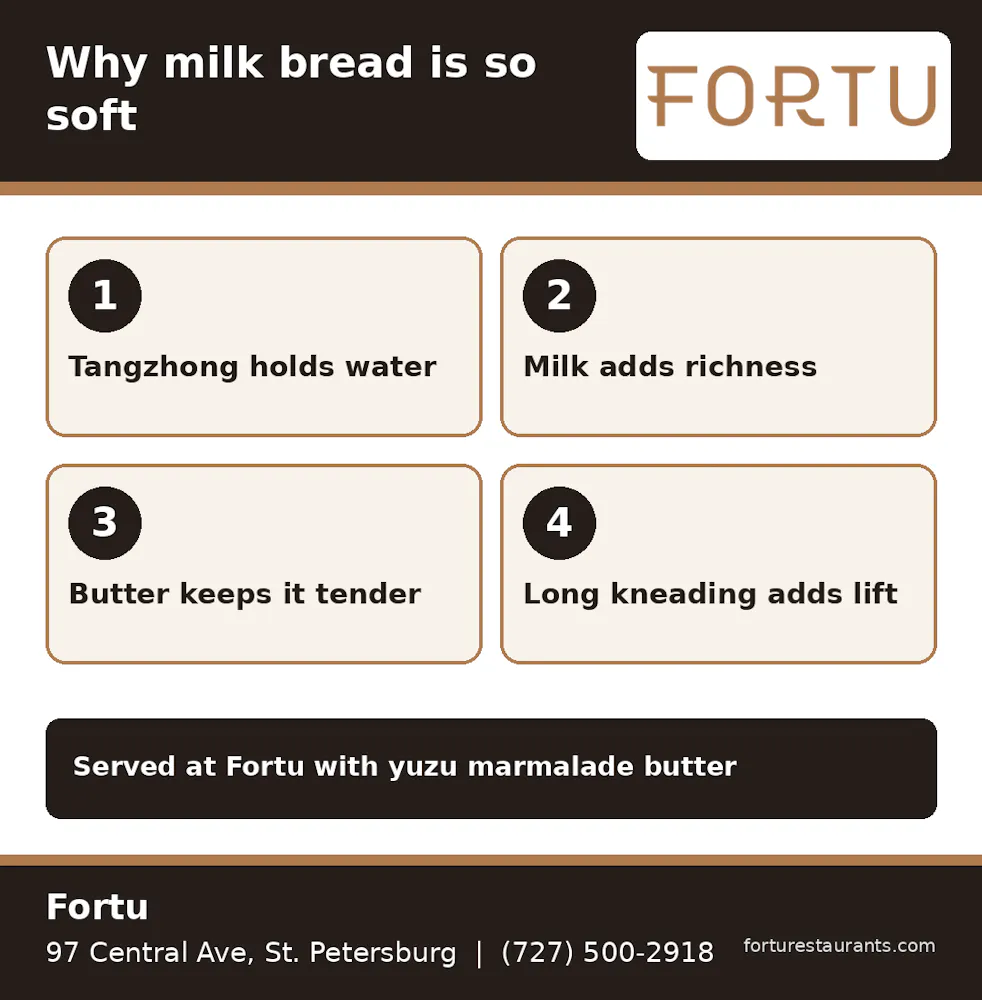
Infographic: Four reasons Japanese milk bread is so soft: tangzhong, milk, butter and long kneading.
Why Start a Meal With Bread at a Japanese-Inspired Restaurant?
Starting with bread may seem more European than Japanese. But milk bread has been part of Japanese baking for many decades, and it reflects how Japan has blended outside influences into its own food culture. That idea fits Fortu well, because our menu celebrates Japan's culinary spirit through the lens of worldwide influence.
The bread also sets a relaxed pace. While the table shares it, everyone can look over the menu, talk about favorites and plan the next round together. It is an easy way to ease into a longer dinner, whether it is a date night in St. Pete or a celebration with friends.
In a hurry? Call (727) 866-4633
Frequently Asked Questions
Is Japanese milk bread the same as brioche?
No. Both are enriched breads, but brioche uses much more butter and eggs. Japanese milk bread is lighter and softer, with a fluffy, stretchy crumb.
What is tangzhong?
Tangzhong is a cooked paste of flour and water or milk, and bakers add it to the dough so the bread holds more moisture and stays soft for longer.
Does Fortu serve Japanese milk bread every night?
Japanese milk bread with yuzu marmalade butter is on the current dinner menu. Menus can change, so check the menus page before you visit.
What does yuzu taste like?
Yuzu tastes bright and floral, with notes of lemon, grapefruit and mandarin, and its aromatic peel is prized in Japanese cooking.
Where is Fortu located?
Fortu is at 97 Central Ave, St. Petersburg, FL 33701. Call (727) 500-2918 or visit the hours and location page.